
Climate controlled car storage is significantly superior to standard vehicle storage because it actively regulates internal temperature and relative humidity levels to prevent ambient thermal stress, condensation, oxidative corrosion, material degradation, and mechanical seal drying. Standard unconditioned units expose delicate vehicle components to extreme temperature swings and moisture accumulation, which rapidly degrades custom exterior finishes, luxury leather interiors, sensitive electronic wiring, and precision engine hardware. By maintaining a stable, environmentally optimized atmosphere, climate-controlled environments ensure long-term mechanical reliability, preservation of high-end vehicle craftsmanship, and maximum value retention.
The Critical Role of Regulated Environmental Storage for Vehicle Preservation
When preserving a luxury automobile, high-performance sports car, or cherished classic, choosing the right storage environment directly impacts its structural longevity, aesthetic elegance, and resale evaluation. While standard outdoor parking or basic unheated self-storage spaces may seem convenient, they expose vehicles to fluctuating atmospheric elements that silently degrade internal and external systems over time. Discerning vehicle owners seeking climate controlled car storage in Windsor Locks understand that regulated atmospheric housing is essential for uncompromised preservation standards.
Environmental Comparison: Climate Controlled vs. Standard Storage
| Feature / Condition | Standard Vehicle Storage | Climate Controlled Car Storage |
| Temperature Control | Unconditioned; fluctuates with external seasonal extremes (-0°F to 100°F+) | Regulated ambient range (typically 55°F to 70°F year-round) |
| Humidity Management | Unmanaged; relative humidity frequently spikes above 75% | Actively maintained relative humidity (40% to 50%) |
| Condensation Risk | High; condensation forms on cold engine components and panels | None; prevents dew point shifts and moisture condensation |
| Material Impact | Dried rubber seals, cracked leather, oxidized wiring, rusted undercarriage | Flexible elastomeric seals, supple leather, rust-free chassis |
| Finish Protection | Micro-cracked clear coats and degraded, yellowed PPF/coatings | Preserved hydrophobic properties, deep gloss, and film elasticity |
Understanding Ambient Thermal Stress and Atmospheric Moisture Dynamics
Atmospheric moisture and rapid temperature oscillations are the primary threats to stored vehicles. Unconditioned storage facilities allow internal conditions to swing from below-zero winter freezes to over 100°F in summer, subjecting metal components, body panels, and seals to constant thermal expansion stress. As warm, humid air cools overnight, it reaches its dew point and condenses on cold metallic and fabric surfaces, triggering rust, engine component oxidation, and interior mold growth.
During a recent audit for a firm in Ellington, our team observed unconditioned storage facilities exceeding 75% humidity, causing premature mold on leather seating and suspension corrosion within a single season. Controlled atmospheric housing prevents this by keeping humidity at 40%–50%, stopping oxidation and biological growth entirely.
Protecting Paintwork, Custom Films, and Ceramic Coatings
An automotive finish consists of primer, base coat, clear coat, and protective layers like PPF or ceramic coatings. Severe thermal cycles in standard storage cause clear coat micro-cracking and degrade protective films. Unconditioned spaces allow dust, fallout, and humidity to embed in paint pores, creating permanent contamination that dulls depth and optical clarity.
Housing your vehicle in a climate-controlled environment stabilizes paint structures. Paired with XPEL protective films or professional ceramic coatings, securing Windsor Locks climate controlled car storage preserves mirror-like depth, hydrophobicity, and finish clarity for years.
How-To Prepare Your Vehicle for Long-Term Storage
To maximize the benefits of atmospheric preservation and ensure seamless mechanical readiness upon startup, follow these essential preparation steps:
- Detail and Seal the Exterior: Wash, decontaminate, and apply or maintain professional ceramic coatings or paint protection film to prevent surface fallout bonding during storage.
- Top Off and Preserve Fluids: Change engine oil to eliminate acidic blow-by contaminants, top off fresh fuel with a quality stabilizer, and flush old hydroscopic brake fluid.
- Set Proper Tire Pressure: Inflate tires to the recommended storage pressure (or elevate on flat-spotting ramps) to protect radial tires against structural distortion.
- Connect a Smart Battery Tender: Attach a microprocessor-controlled battery tender to prevent continuous voltage drain on delicate ECUs and electronic arrays.
- Clean and Condition Interior Surfaces: Clean and apply natural oil conditioners to top-grain leather, vacuum Alcantara, and place desiccant packs inside the cabin.
Preserving Complex Automotive Electronics and Wiring Systems
Modern luxury and exotic vehicles feature intricate wiring harnesses, dozens of electronic control units (ECUs), digital sensor arrays, and sophisticated infotainment displays. Unconditioned storage environments represent a severe hazard to these sensitive electronics.
When atmospheric moisture condenses within interior cabins and engine bays, it penetrates electrical connectors and terminal blocks. Micro-corrosion on gold or copper pins leads to unexpected voltage drops, false diagnostic error codes, system glitches, or complete electronic module failures. Repairing these electrical issues often requires dismantling interior dashboards or tracing wiring harnesses across the entire chassis, a labor-intensive and costly process.
Climate regulation prevents moisture ingress completely, ensuring that electronic interfaces, high-definition displays, and complex sensor networks remain fully dry, operational, and free from oxidation. This operational readiness ensures that when you retrieve your vehicle, it starts cleanly and operates without electronic warnings or system faults.
Key Degradation Risks in Standard Storage
- Brake Fluid Breakdown: Hydroscopic brake fluid draws ambient moisture through rubber seals, lowering its boiling point and inducing internal caliper corrosion.
- Crankcase Acidification: Moisture build-up within stagnant engine oil causes sludge and corrosive acids that attack internal cylinder walls and bearings.
- Fuel Phase Separation: Thermal cycling forces fuel tanks to breathe moist air, leading to water accumulation and ethanol fuel breakdown.
- Elastomeric Hardening: Repeated thermal shocks dry out rubber hoses, silicone gaskets, and suspension bushings, making them brittle and prone to fluid leaks.
- Leather & Interior Rot: Excess humidity induces stitching rot and mold, while intense ambient heat bakes natural oils out of luxury hides.
Interior Luxury Preservation: Leather, Alcantara, and Trim Materials
The interior of a luxury vehicle requires specialized atmospheric care. Organic materials such as top-grain leather, fine Alcantara, hand-crafted wood veneers, and custom carbon fiber accents are exceptionally sensitive to ambient moisture and heat.
Excessive ambient heat bakes essential natural oils out of leather hide, causing it to shrink, stiffen, and crack along seam lines. Conversely, high humidity causes leather to absorb water vapor, leading to warping, stitching rot, and mold growth. Fine wood veneers and carbon fiber trims finished with high-gloss clear coats can warp or delaminate under fluctuating thermal expansion rates between the substrate and topcoat.
Maintaining a steady, climate-controlled setting ensures that natural oils remain locked within leather hides, seams retain their tension, and exotic interior trims maintain their original factory lustre without cracking or peeling.
Our Master Craftsmanship and Advanced Storage Standards
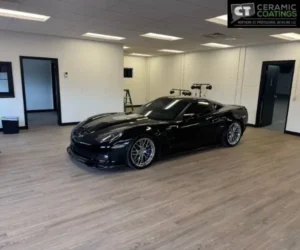
At CT Ceramic Coatings, automotive preservation goes beyond basic shelter. Backed by nine years of expertise, our climate-controlled shop utilizes advanced technology, air conditioning, epoxy flooring, and specialized lighting to ensure optimal environmental conditions year-round.
We understand that luxury and classic vehicles require unmatched services and unparalleled protection. Through precision XPEL ceramic coatings, paint protection films, and climate-controlled housing, our team applies detailed craftsmanship to every vehicle, utilizing precision equipment to guarantee durability and exceptional protective qualities.
For discerning owners seeking climate controlled car storage in Windsor Locks, MA, our facility delivers uncompromising protection against seasonal climate extremes. During a recent audit for a firm in Windsor Locks, our specialists demonstrated how cleanroom-grade standards prevent environmental degradation and maximize long-term vehicle value.
People Also Ask
What temperature is ideal for long-term car storage?
The optimal ambient temperature for long-term vehicle storage ranges between 55°F and 70°F, paired with a relative humidity level of 40% to 50%. This controlled atmosphere prevents condensation formation, stops metal corrosion, prevents leather drying, and keeps rubber seals flexible.
Can standard vehicle storage cause engine damage?
Yes, standard unconditioned storage allows atmospheric humidity to condense inside the engine crankcase and fuel system. Moisture contamination leads to internal rust on cylinder walls, acidic oil breakdown, fuel degradation, and hardened engine gaskets that leak fluid upon startup.
Does climate-controlled storage help preserve ceramic coatings and PPF?
Absolutely. Climate-controlled environments shield paint protection films (PPF) and ceramic coatings from rapid thermal cycles, freezing temperatures, and extreme ambient heat that can weaken adhesive bonds, reduce film elasticity, or degrade hydrophobic topcoat properties over time.
How often should a stored car be inspected while in storage?
Even in a climate-controlled facility, vehicles should undergo a visual inspection every 30 to 45 days to check tire pressures, monitor battery tender status, verify fluid levels, and ensure the surrounding environmental parameters remain perfectly balanced.
Experience Unmatched Vehicle Protection at CT Ceramic Coatings
Your vehicle deserves an elevated level of protection and detailed craftsmanship. Whether you require elite ceramic coating, XPEL paint protection film, high-performance window tinting, or premier storage preservation, CT Ceramic Coatings delivers uncompromising quality and peace of mind.
Discover the difference precision equipment and state-of-the-art facilities make for your luxury, classic, or performance car. Contact us today!