
Climate-controlled car storage protects long-term vehicle equity by eliminating humidity fluctuations, thermal stress, and atmospheric contaminants. Regulating ambient conditions preserves original factory paint, interior leather, frame integrity, and sensitive electrical components. For collectors and luxury car owners, this specialized protection prevents costly restorative repairs, maintains higher grading scores, and maximizes resale value.
The Micro-Climate Threat: How Uncontrolled Environments Accelerate Depreciation
Automotive depreciation extends far beyond mileage and market trends; environmental degradation is often the primary driver of value loss in low-mileage and collectible automobiles. Uncontrolled garages, standard self-storage units, and barn facilities expose vehicles to severe atmospheric volatility. In regions prone to seasonal extremes, temperature swings create cyclical expansion and contraction in body panels, structural clear coats, rubber gaskets, and interior upholstery.
High relative humidity presents another constant threat to automotive longevity. When relative humidity exceeds 50%, moisture condenses inside hidden structural cavities, door skins, floor pans, and electrical harnesses. This triggers atmospheric oxidation on bare metal, causes mold growth on leather surfaces, and leads to delamination of interior headliners. Conversely, critically low humidity strips essential oils from natural leather, causing fine upholstery to crack, contract, and separate at seams.
Uncontrolled environments act as an invisible, continuous source of wear on every non-metallic component, interior trim piece, and mechanical seal.
The Engineering Behind Environmental Control
Regulated automotive storage relies on precise environmental control. Specialized facilities maintain strict parameters engineered specifically for automotive preservation rather than simply heating or cooling an enclosure. Optimal Windsor Locks climate controlled car storage requires maintaining relative humidity between 45% and 50% alongside a stable ambient temperature range between 65°F and 70°F.
Technical Standard: Optimal Automotive Storage Metrics
- Relative Humidity Target: 45% – 50% RH (Prevents both metal oxidation and leather desiccation)
- Temperature Target: 65°F – 70°F (Mitigates thermal expansion stress and rubber hardening)
- Air Filtration: Continuous positive-pressure micro-particulate filtration (Eliminates settling dust and chemical pollutants)
By preventing rapid temperature fluctuations, regulated facilities eliminate condensation cycles on hidden vehicle surfaces. When relative humidity is strictly capped at 50%, iron and steel components cannot form ferric oxide (rust). Stable ambient temperatures ensure synthetic fluid viscosities remain baseline, prevent engine seals from drying and shrinking, and safeguard digital circuit boards from solder joints snapping due to thermal fatigue.
Integrating continuous positive-pressure air filtration filters out dust, industrial fallout, and particulate matter. Ambient particulate matter acts as a microscopic abrasive on clear coat finishes, absorbing ambient moisture and scratching paint when wiped down during routine maintenance.
Preserving Paintwork and Exterior Craftsmanship
A vehicle’s exterior finish is its most visible indicator of value. Paint measuring gauges and visual inspection tools instantly reveal clear coat thinning, heavy oxidation, or previous repaint work factors that significantly reduce collector valuation. Regulated storage protects automotive paint systems through several critical mechanisms:
- Elimination of UV Degradation: Continuous exposure to ultraviolet radiation breaks down chemical bonds within clear coats, resulting in chalking, fading, and yellowing of light pigments. Climate-managed storage facilities utilize windowless or UV-filtered light environments to preserve original factory finishes.
- Prevention of Chemical Etching: In uncontrolled environments, airborne industrial fallout, mineral-heavy dew drops, and humidity form acidic solutions on paint surfaces. These solutions etch deep into clear coats, requiring aggressive paint correction to rectify.
- Thermal Stability for Coatings: High-end paint protection films (PPF) and professional ceramic coatings perform best in stable environments. Unchecked heat cycles degrade surface coatings prematurely, reducing hydrophobicity and optical clarity.
Vehicles stored in climate-managed environments maintain high gloss levels and paint depth scores, ensuring original factory finishes remain pristine without requiring heavy paint correction.
Interior Luxury Preservation: Materials and Craftsmanship
Modern luxury and high-performance sports cars feature delicate cabin materials, including semi-aniline leathers, custom stitching, open-pore woods, Alcantara, and soft-touch composites. These materials are highly susceptible to environmental damage.
When subjected to summer heat inside an unconditioned garage where ambient temperatures routinely surpass 120°F, the natural oils inside leather upholsteries evaporate rapidly. This leads to hardening, seam shrinkage, and cracking. High humidity also introduces hidden mold spores into carpet underlayments, air conditioning ducts, and leather pores, creating persistent odors that drastically reduce vehicle valuation.
Professional climate-controlled storage acts as an atmospheric shield for fine interiors. Holding humidity at ideal equilibrium levels keeps leather supple, dashboard bondings intact, carbon fiber interior accents free of resin clouding, and headliners attached with factory structural adhesion. Preserving these interior components retains original factory craftsmanship and full resale value.
Protecting Mechanical Integrity and Electrical Systems
While cosmetic preservation is crucial, long-term valuation depends equally on mechanical integrity and electrical health. Modern vehicles are complex technical structures containing dozens of microprocessors, fiber-optic networks, rubber hoses, and composite gaskets.
Extended storage in unconditioned spaces introduces several silent mechanical degradation hazards:
- Fluid Breakdown and Condensation Contamination: Temperature swings cause moisture to condense inside engine blocks, transmission cases, and differential housings. This moisture mixes with automotive fluids, accelerating fluid acidity and corrosion on internal bearings.
- Gasket and Seal Hardening: Engine crank seals, valve cover gaskets, and transmission seals require consistent ambient temperatures to maintain flexibility. Extreme cold hardens synthetic elastomers, causing fluid leaks once the engine reaches operating temperature.
- Electrical Connector Oxidation: Micro-condensation inside pin connectors creates high-resistance electrical faults, leading to ECU errors, digital display failures, and complex wiring troubleshooting.
Vehicles stored in regulated environments start smoothly, operate without seal failures, and pass mechanical checks effortlessly.
The Proprietary Protection Standard at CT Ceramic Coatings
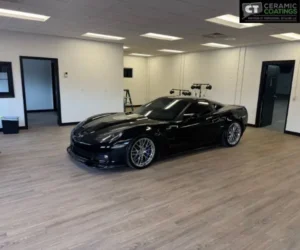
At CT Ceramic Coatings, we protect high-end and collector vehicles through a precision-driven approach. Our luxury facility features 136 specialized overhead spotlights, full climate control, seamless epoxy floors, and continuous surface measurement tools to guarantee optimal preservation and detailing. As an official XPEL-certified provider, we apply advanced ceramic coatings and paint protection films (PPF) that shield paintwork from chemical contamination and environmental wear, safeguarding your vehicle’s beauty and long-term market value.
Discerning owners looking for superior preservation can learn more about our specialized regional services by visiting our official dedicated page for climate controlled car storage in Windsor Locks.
Financial ROI: The Valuation Difference
Investing in specialized environmental preservation yields clear financial returns. Collector auction data, trade-in valuations, and private sale records show that original-paint vehicles with fully documented environmental storage histories command price premiums over similar models kept in basic garages.
Value Impact Analysis: Environmental Preservation
- Original Paint Retention: Vehicles with documented paint preservation command 15%–35% higher auction premiums compared to repainted examples.
- Interior Restoration Avoidance: Preserving original factory leather and trim saves substantial costs in full upholstery restoration.
- Mechanical Preservation: Eliminating moisture-induced engine, seal, and electrical corrosion avoids thousands in preemptive teardown and repair fees.
Selecting specialized climate controlled car storage in Windsor Locks, CT is an essential step for owners seeking to maximize their vehicle’s asset value, preserve factory originality, and prevent environmental degradation.
People Also Ask (FAQ)
What is the ideal temperature and humidity for storing a luxury or classic car? The ideal environment for long-term vehicle preservation is a temperature maintained between 65°F and 70°F and a relative humidity strictly held between 45% and 50%. This precise balance prevents metal rust, stops leather from drying or cracking, and protects delicate electronic module wiring from micro-condensation.
How does climate-controlled storage differ from standard heated garage storage? Heated garages only manage lower temperature thresholds and often lower relative humidity to dangerously dry levels, which damages interior leather and wooden trims. True climate-controlled automotive storage manages both temperature and relative humidity simultaneously while utilizing continuous particulate air filtration to eliminate airborne dust and industrial fallout.
Does climate-controlled storage really prevent rust on vintage vehicles? Yes. Atmospheric oxidation (rust) requires relative humidity levels above 50% to trigger rapid corrosion on exposed automotive metals. By maintaining relative humidity strictly below 50% year-round, climate-controlled storage stops the chemical reaction required for rust formation on frame components, suspension linkages, and inner body panels.
How does XPEL paint protection film work alongside climate-controlled storage? XPEL paint protection film provides a physical barrier against rock chips and abrasions, while climate-controlled storage protects the film’s self-healing topcoat from extreme thermal cycles and environmental staining. Together, they offer maximum protection for preserving factory paint finishes.
Experience the CT Ceramic Coatings Difference
Your vehicle deserves protection and elevated care. At CT Ceramic Coatings, our precision-driven team blends technical excellence with luxury service to protect your vehicle’s value for years to come.
Whether you require elite XPEL ceramic coatings, paint protection film, or specialized environmental storage guidance, trust our team to deliver quality.
Contact us today to request your personal quote today.