
Professional paint correction restores automotive paint gloss, depth, and clarity by mechanically removing microscopic surface imperfections, such as swirl marks, fine scratches, oxidation, and holograms, through a precision leveling of the clear coat. By flattening the outermost layer of paint using specialized abrasive compounds and machine polishers, the process eliminates the jagged edges that scatter light, allowing it to reflect perfectly off a smooth surface. This meticulous restoration creates a pristine, mirror-like finish that enhances color depth and maximizes visual clarity.
The Science of Light Reflection and Paint Imperfections
To understand how paint correction transforms a vehicle’s appearance, look at how light interacts with a damaged clear coat. Over time, automatic car washes, improper drying, and road debris introduce thousands of microscopic scratches into the factory clear coat.
When sunlight or overhead artificial light strikes these V-shaped scratches, the damaged surface scatters the light rays in a chaotic pattern. This creates the “swirl marks” or “cobwebbing” effect that masks the true color pigment beneath, leaving the vehicle looking dull and weathered.
A professional multi-stage correction process meticulously levels the surrounding clear coat until it matches the depth of the lowest scratch. By smoothing out these microscopic valleys into a perfectly flat surface, light bounces back in a uniform direction. This produces a crisp reflection, heightened clarity, and a dramatic “wet-look” depth that temporary waxes or fillers cannot replicate. Achieving this level of optical perfection requires specialized training, making professional paint correction in Hartford County the preferred choice for discerning car owners.
Decontamination and Prep: The Foundation of Precision Correction
True restoration requires an ultra-clean foundation. Buffing over embedded contaminants can pull raw grit into the polishing pads, causing severe marring across the vehicle.
The preparation begins with a multi-step decontamination wash. First, a high-foaming strip wash removes old waxes, sealants, and road grime. Next, a chemical iron decontaminant dissolves embedded metallic fallout, brake dust, and rail dust. The final phase involves a mechanical clay bar treatment across every square inch of the painted surfaces.
This deep-cleaning process ensures that the polishing pads make direct, unobstructed contact with the clear coat. For vehicle owners seeking elite paint correction in Hartford County, CT, this intensive preparation stage represents the difference between a temporary shine and an expert, long-lasting refinement.
The Step-by-Step Restoration Journey
To achieve a true mirror-like finish, the paint correction process must follow a strict, highly calculated sequence. Skipping or rushing a single phase can compromise the clarity of the clear coat or embed dangerous grit back into the finish.
How to Execute a Professional Paint Correction Process
- Chemical and Mechanical Decontamination
Old waxes, sealants, and dirt are stripped with a foam-cannon pre-soak. Technicians then apply a specialized iron remover to dissolve embedded metallic fallout, followed by a manual clay bar treatment to lift away stubborn industrial overspray. - Digital Paint Depth Analysis
Using electronic digital depth gauges, technicians measure the paint’s micron thickness across every panel. This data reveals exactly how much clear coat is available, ensuring structural integrity is maintained while safely leveling out defects. - Precision Masking and Tape Prep
To protect delicate trim from high-torque polishers, every rubber seal, plastic molding, chrome badge, and body line transition is meticulously taped off. This prevents edge burning and stops compound residue from packing into tight crevices. - The Heavy Compounding Phase (The “Cut”)
Machine polishers utilize micro-abrasive compounds and aggressive microfiber or wool pads in controlled, overlapping sections. The friction breaks down the compound, shaving off microscopic peaks of the damaged clear coat until they match the depth of the scratches. - The Finishing and Refining Stage (The “Jeweling”)
Technicians switch to an ultra-fine foam pad and a jewelers-grade finishing polish to eliminate any micro-marring or haze left from the heavy compounding step. This stage refines the surface to an absolute flat plane, maximizing optical depth and clarity. - Isopropyl Alcohol (IPA) Panel Wipes
Every panel is sprayed with an isopropyl alcohol mixture and wiped clean to strip away remaining polishing lubricants that could mask minor defects. This reveals the true, naked state of the clear coat for final inspection, a standard practice during a premier Hartford County paint correction project.
Comparing Paint Correction Tiers
Not every vehicle requires the same level of intensive correction. The right approach is dependent on your vehicle’s current paint condition, its historical clear coat depth, and your overall aesthetic goals.
| Correction Tier | Best Suited For | Target Defect Removal | Visual Outcome |
| Stage 1 Paint Enhancement | New vehicles, well-maintained paint, or soft clear coats with very light wash haze. | 50% – 60% of minor micro-marring and dullness. | Drastically increases gloss and color brightness by eliminating superficial oxidation. |
| Stage 2 Paint Correction | Daily drivers with moderate swirl marks, deep automatic car wash scratches, and water spots. | 80% – 90% of medium-depth surface imperfections. | Restores a true, crisp reflection and darkens color depth by leveling out chaotic light reflection. |
| Stage 3 Major Restoration | Neglected vehicles, performance collectibles, or classics experiencing heavy oxidation and deep isolated scratches. | 95%+ of deep random isolated defects (RIDS) and severe marring. | Delivers a flawless, concours-grade, mirror-like finish that resembles wet glas |
What Paint Correction Can and Cannot Fix
Understanding the technical boundaries of what can safely be repaired via machine polishing helps set realistic expectations before protecting your vehicle.
- What It Permanently Fixes:
- Swirl marks and cobwebbing from improper hand-washing.
- Holograms and buffers trails left by inexperienced detailers.
- Light environmental etching from bird droppings or hard water mineral deposits.
- Dullness and fading caused by UV-ray oxidation.
- What It Cannot Fix (Requires Body Shop Refinishing):
- Deep scratches that pass completely through the clear coat into the color base coat.
- Severe clear coat failure where the protective layer is peeling, flaking, or turning white.
- Rock chips that have exposed raw metal or plastic primer.
- Deep door dings or structural sheet metal dents.
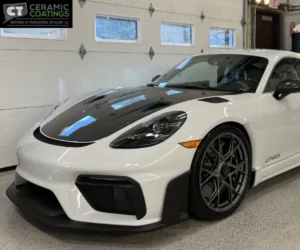
Delivering Technical Excellence: The CT Ceramic Coatings Standard
At CT Ceramic Coatings, our paint correction blends technical excellence with nine years of expertise to safely navigate every unique paint system. We provide unmatched services tailored to your vehicle’s structural needs, ensuring optimal clear coat preservation through detailed craftsmanship.
True precision craftsmanship demands a controlled environment. Our state-of-the-art, luxury-grade facility is fully climate-controlled to eliminate airborne dust and humidity. For absolute transparency, our shop features an advanced technology lighting matrix of 136 individual spotlights that mimic harsh, direct sunlight, exposing even the faintest micro-swirls.
Using precision equipment, our specialists monitor paint thickness dynamically with electronic gauges. This delivers unparalleled protection and optical clarity without compromising structural integrity. The result is a flawless baseline finish with exceptional protective qualities and lasting durability, the perfect canvas for long-term ceramic coatings or films.
Preservation: Locking in Clarity for Years to Come
Correcting the paint is only half the battle; preserving that flawless finish is where true vehicle longevity is secured. Once the clear coat is perfectly leveled and polished, it is completely bare and highly vulnerable to environmental hazards like UV rays, bird droppings, and road salt, which cause rapid oxidation and micro-scratches. To lock in this mirror-like reflection, we recommend applying a professional-grade ceramic coating or an advanced Paint Protection Film (PPF) to form a permanent bond over the fresh surface. A premium coating adds a hydrophobic barrier that repels dirt and makes washing effortless, ensuring that combining a flawless paint restoration with industry-leading XPEL protection keeps your performance, luxury, or collectible vehicle pristine for years of driving.
People Also Ask
What is the difference between car polishing and paint correction?
Car polishing is a temporary cosmetic fix that uses fillers to hide light surface marks and boost shine. Paint correction is a multi-stage mechanical process that permanently removes defects by leveling the clear coat using precision machine polishers.
Will paint correction remove deep scratches from my vehicle?
It permanently removes scratches contained entirely within the clear coat. If a scratch passes into the color coat or primer (if your fingernail catches on it), it is too deep to polish out and requires touch-up paint or refinishing.
How long does a professional paint correction process take?
It typically takes between 10 to 40 hours of meticulous labor. This timeline depends on the vehicle’s size, paint hardness, and defect severity, covering everything from decontamination and depth measuring to multi-stage compounding.
How often should a vehicle undergo paint correction?
Because a clear coat is finite, a full correction should only be done a few times over a vehicle’s lifespan. Once corrected, the flawless finish can be preserved indefinitely through proper hand-washing and a protective ceramic coating or film.
Experience the Pinnacle of Automotive Refinement
At CT Ceramic Coatings, we take pride in offering discerning vehicle owners complete confidence through uncompromising quality and technical luxury. Whether you are seeking precision paint work or bringing your vehicle from nearby Southwick to experience our state-of-the-art facility, our XPEL-certified craftsmen are ready to transform your finish. We leverage CRM automation to guarantee a seamless client journey from initial contact to the final walkthrough, ensuring faster follow-ups and a smooth premium experience.
Ready to rid your vehicle of unsightly defects and unlock a mirror-like depth that lasts? Contact us to request a personalized quote, or schedule an in-person consultation at our shop today to see the CT Ceramic Coatings difference firsthand.