
Paint Protection Film (PPF) is the most effective defense against winter debris, acting as a high-impact sacrificial barrier that absorbs the energy of flying salt, sand, and gravel. By installing a premium thermoplastic polyurethane layer, you prevent these abrasive materials from reaching your factory paint, ensuring your vehicle remains free of chips, scratches, and chemical etching during the harsh winter months.
The Harsh Reality of Winter Roads and Your Vehicle’s Finish
Winter brings a unique set of challenges for any vehicle owner who takes pride in a flawless finish. As temperatures drop, road crews begin the necessary but destructive process of treating asphalt with a mixture of sand, salt, and liquid de-icers. While these materials make driving safer, they turn every commute into a gauntlet of high-speed projectiles.
When you are driving through Ellington, Hartford County, the “winter mix” kicked up by the tires of the car in front of you acts like a localized sandblaster. While durable, standard automotive clear coat is not designed to withstand repeated impact from frozen gravel or the corrosive effects of road salt. Without a dedicated physical barrier, your vehicle’s front fascia, hood, and rocker panels will inevitably succumb to “road rash,” thousands of tiny pits that dull the paint and expose the underlying metal to oxidation.
Comparing Winter Hazards and Protection Methods
To understand why PPF is the gold standard for cold-weather preservation, it is helpful to compare it with traditional methods.
| Feature | Automotive Wax | Ceramic Coating | Paint Protection Film (PPF) |
| Impact Resistance | None | Minimal | Excellent (High-Impact) |
| Chemical Shield | Low | High | High |
| Self-Healing | No | No | Yes (Heat-Activated) |
| Longevity | 1-3 Months | 2-5 Years | Up to 10 Years |
| Winter Debris Defense | Poor | Moderate (Chemical only) | Superior |
How PPF Functions as a Winter Shield
At CT Ceramic Coatings, we treat every vehicle as a work of art. The effectiveness of PPF in winter is heavily dependent on the quality of the installation. A rushed job with poor edge-wrapping or improper adhesion will allow moisture and salt to creep under the film.
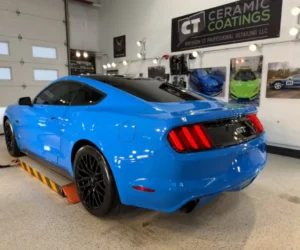
Primary Protective Benefits:
- Impact Absorption: PPF is elastomeric, meaning it stretches and compresses. This “cushioning” effect dissipates the energy of a salt crystal or stone across a wider area.
- Chemical Resistance: Road salt is hygroscopic, meaning it attracts moisture. PPF is non-porous and prevents salt-laden slush from etching your clear coat.
- Hydrophobic Properties: Modern films help shed water and slush, making it harder for ice to bond directly to your vehicle’s panels.
- UV Preservation: Even in winter, UV rays can degrade paint; PPF provides a filter to prevent fading.
How to Maintain Your PPF During a Winter Season
To ensure your investment continues to perform at a high level when the salt starts flying in Connecticut, follow these maintenance steps:
- Rinse Regularly: Use a touchless wash or a low-pressure hose to remove salt and brine buildup every two weeks.
- Avoid Ice Scrapers on Film: Never use a plastic ice scraper on filmed surfaces. Use the vehicle’s defroster or a soft snow brush.
- Use PPF-Safe Sealants: Apply a dedicated film sealant or a ceramic boost to maintain the film’s slickness and hydrophobic properties.
- Mind the Edges: When power washing, keep the nozzle at least 12 inches away from film edges to prevent high-pressure water from lifting the adhesive.
Total Vehicle Protection Strategies
While protecting the exterior from winter debris is a priority for most enthusiasts, the season also brings harsh glare from the low sun reflecting off white snow. To enhance your driving experience and safeguard your interior surfaces, many of our clients opt for paint protection film in Connecticut. This addition helps maintain a consistent internal temperature while adding a layer of privacy and safety to your daily winter commute.
Furthermore, we often find that vehicles exposed to the abrasive conditions of winter benefit from a comprehensive approach to maintenance. By using professional Connecticut paint protection film, you ensure your upholstery and dashboard are shielded from UV rays that persist even on the coldest days, preventing cracking and fading over the years of ownership.
Our commitment to craftsmanship means we look at the vehicle as a whole, ensuring that every square inch is prepared for the elements. We highly recommend paint protection film services in Connecticut as a companion to your film installation, as this creates a unified barrier against both the mechanical threats of the road and the environmental threats from the sun.
The Long-Term Value of Winter Protection
Choosing CT Ceramic Coatings to invest in Paint Protection Film is a decision rooted in the long-term preservation of your investment. For luxury car owners and automotive collectors, the “factory paint” is a non-renewable resource. Once it is chipped or repainted, the vehicle’s resale value and aesthetic integrity are compromised.
By installing PPF, you are essentially freezing the condition of your paint in time. When the winter ends and the salt is finally washed away, you won’t be greeted by a pockmarked bumper. For those who live in Connecticut, where road conditions can be unpredictable, this provides an invaluable peace of mind and keeps your vehicle in showroom condition year-round.
Why Choose CT Ceramic Coatings?
CT Ceramic Coatings is built on uncompromising quality and a passion for automotive excellence. We are not just installers; we are skilled craftsmen who understand the chemistry and physics of paint protection. We believe in doing the job right the first time through careful preparation and the use of premium materials.
When you trust us with your vehicle, you aren’t just getting a service, you are gaining a partner dedicated to the life of your car. Our XPEL-certified technicians use advanced facility designs to ensure flawless results with no compromises. We want you to feel a sense of pride and confidence every time you get behind the wheel, knowing your vehicle is shielded by the best technology available.
Don’t Wait for the First Snowfall
The best time to protect your vehicle from winter debris is before the first salt truck hits the road. Once the damage is done, you are looking at expensive paint correction or bodywork. By acting now, you ensure that your vehicle remains a work of art, regardless of what the New England elements throw at it.
Are you ready to give your vehicle the ultimate defense against winter? Request a quote or contact us today and experience the difference that precision craftsmanship makes.
People Also Ask (FAQ)
Does road salt damage PPF?
No, high-quality PPF is designed to be chemically resistant to road salt and magnesium chloride. While you should still wash your car regularly in the winter to remove buildup, the salt will not penetrate or degrade the film.
Can I power wash my car with PPF during the winter?
Yes, but you must be careful. Avoid aiming the high-pressure nozzle directly at the edges of the film, as this can cause lifting. We recommend keeping the nozzle at least 12 inches away from the surface.
How long does PPF last in harsh winter climates?
When professionally installed by a team like CT Ceramic Coatings, premium PPF is typically warrantied for 10 years. It is designed to withstand extreme temperature fluctuations without yellowing, cracking, or peeling.
Is PPF better than ceramic coating for winter?
For impact protection against rocks and salt, PPF is significantly better because it is a physical film. However, a ceramic coating is excellent for making the car easier to wash. For the ultimate winter protection, many owners choose to apply a ceramic coating over their PPF.